

NOVEMBER 16, 2026
What Should Families Expect During the First Week of Assisted Living?
The first week in assisted living usually involves getting familiar with a new home, learning how daily support works, and adjusting routines at a manageable pace. There isn’t one schedule that fits every resident. At Grand Dignity Homes in Folsom, we begin with a consultation about a prospective resident’s needs and preferences, then create a personalized care plan and arrange the move-in. Knowing what to ask before and after that transition can make the first few days clearer for everyone.
Moving into a residential care home is a significant change. The National Institute on Aging’s guide to choosing long-term care recommends considering both a person’s current needs and the services they might need later. That same conversation can set useful expectations for the first week.
Before the first week in assisted living
The move-in experience starts before moving day. Families should share the details that make care personal: daily habits, food preferences, mobility needs, medication routines, and what helps their loved one feel comfortable. Small details matter. A person might prefer a slower start to the morning or need extra time when getting ready.
At Grand Dignity Homes, our admission process begins with an initial consultation to understand a loved one’s needs and preferences. We then develop a personalized care plan, guide families through the necessary paperwork, and arrange a move-in date. You can learn more about the admission process and residential amenities.
Before the move, ask the home what to bring, how medication information should be shared, and who to contact with questions. Confirm the move-in time and any details about the room or paperwork. Write down the answers so family members have the same information.
Moving day: focus on settling in
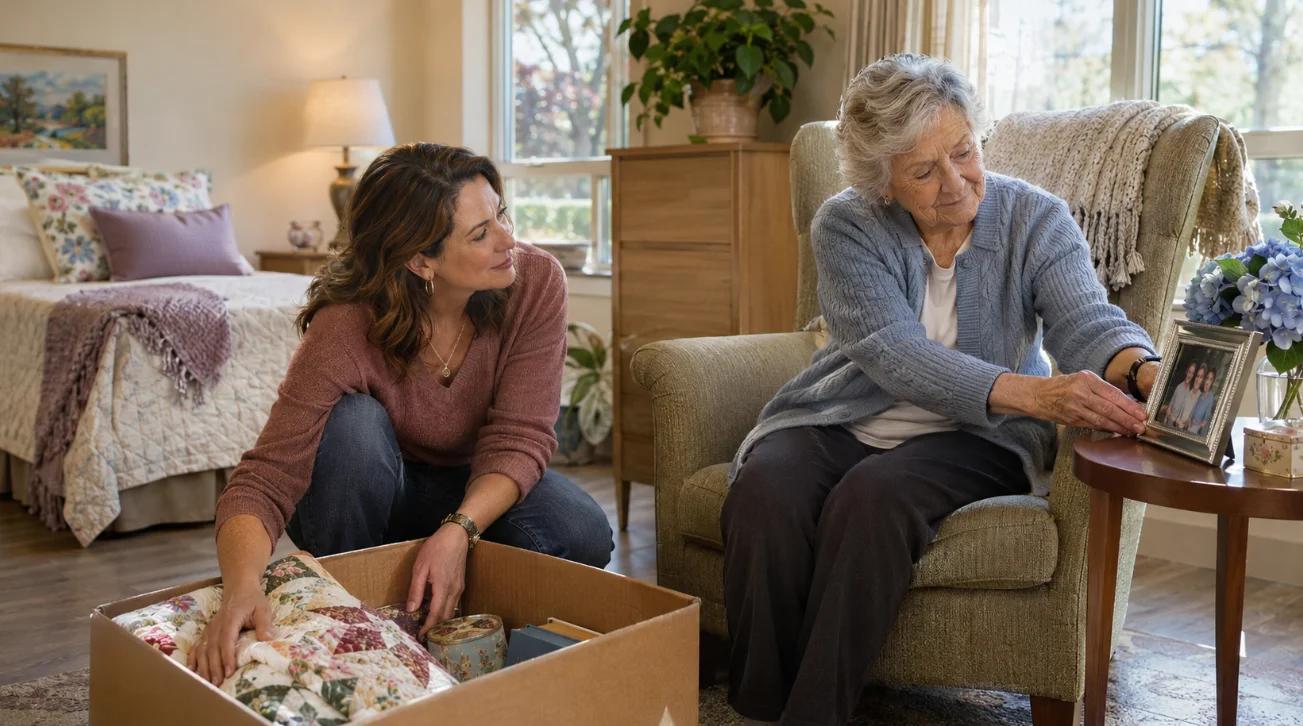
Moving day can feel busy, so keep the first priorities simple. Help your loved one get comfortable in their room, unpack a few familiar belongings, and learn where the main shared spaces are. You don’t need to arrange every item or establish a perfect routine in a single afternoon.
A favorite blanket, a framed photo, or a familiar bedside item can make a new space feel more recognizable. Ask the residence about room setup and what personal items fit safely. Keep hallways and walking areas clear, especially if your loved one uses a mobility aid.
Families also benefit from knowing how staff will introduce themselves and explain the home’s daily routines. Ask where meals take place, how residents learn about activities, and how to request assistance. At Grand Dignity Homes, our services include private living spaces, meals, housekeeping, activities, medication management, and staff available around the clock. The amenities page gives families a look at the home and its shared spaces.
What daily life may look like
A residential assisted living home has recurring parts of the day, but the order and pace can vary. Residents may have meals, medication support, housekeeping, activities, and time in their own rooms or common areas. The care plan and a person’s preferences shape what support they receive.
At Grand Dignity Homes, we provide nutritious meals and activities, arrange transportation, and have experienced staff available 24 hours a day. Those services describe what we provide, but they don’t mean every resident follows the same timetable. Ask how the home handles personal preferences, appointments, and quiet time.
A useful question is: “What might an ordinary day look like for my family member, based on their care plan?” That invites a specific answer about the support they need instead of a general description of the home.
The first few days: notice what feels comfortable
In the first days, your loved one may still be learning names, spaces, and routines. Give them room to share what feels easy and what feels unfamiliar. A check-in can be simple: How did meals go? Was it clear where to ask for help? Did the day feel too busy, too quiet, or about right?
Families can help by passing along observations without assuming every adjustment signals a problem. If your loved one says they prefer eating at a different pace or needs help remembering where a room is, tell the care team. They can explain what fits within the care plan and discuss whether any adjustments are appropriate.
Keep an eye on the practical basics, too. Is your loved one comfortable in the room? Do they know how to reach staff? Are there questions about medications, meals, or planned activities that need an answer? Write down anything unresolved and follow up with the home’s designated contact.
How families can support the transition
Family visits can help maintain familiar connections, but each resident’s preferences differ. Ask your loved one what kind of visit feels good: a short conversation, sharing a meal if the home allows it, or help arranging personal items. Follow the home’s guidance on visits and activities.
Use the first week to learn how communication works. Find out whom to call with routine questions, how the home shares updates, and what kinds of changes prompt a call. At Grand Dignity Homes, our approach centers on empathy, integrity, and responsibility. You can read more about our values on the About page.
A quick family note can also keep relatives aligned. Record questions, preferences the resident mentions, and any information the team asks you to provide. Share updates with the family members involved in care so your loved one doesn’t have to repeat the same details to everyone.

When to ask for a care-plan conversation
Settling into a new home can take time, but families should raise concerns that affect a resident’s comfort or care. If your loved one’s needs seem different from what the plan covers, ask the team to talk through the situation. For medical concerns or changes in health, contact the appropriate healthcare professional as well.
Before move-in, be candid about support needs, health conditions, and routines. During the first week, share new information promptly. Clear communication gives the residence a better understanding of the person and helps the family understand what support the home can provide.
A practical first-week checklist
Keep these questions handy during the transition:
- Does my loved one know how to ask for help?
- Have we shared their important routines and preferences?
- Do they understand where meals and activities take place?
- Do we know whom to contact with questions?
- Is anything about the care plan unclear?
- Are there belongings or practical details we still need to arrange?
The first week doesn’t need to follow a perfect script. Focus on learning the routines, listening to your loved one, and resolving questions as they come up. If you’re considering Grand Dignity Homes, contact our team to discuss the consultation and move-in process in Folsom.
Recent Posts

Assisted Living vs. In-Home Care in Folsom: How to Compare Your Options
NOVEMBER 1, 2026

High-End Assisted Living: What Families Should Look For
OCTOBER 5, 2026

What Is Included in an All-Inclusive Residential Care Home?
SEPTEMBER 9, 2026

What Does Luxury Assisted Living Really Mean?
SEPTEMBER 9, 2026

10 Questions to Ask About Overnight Assisted Living Staff
JULY 14, 2026